
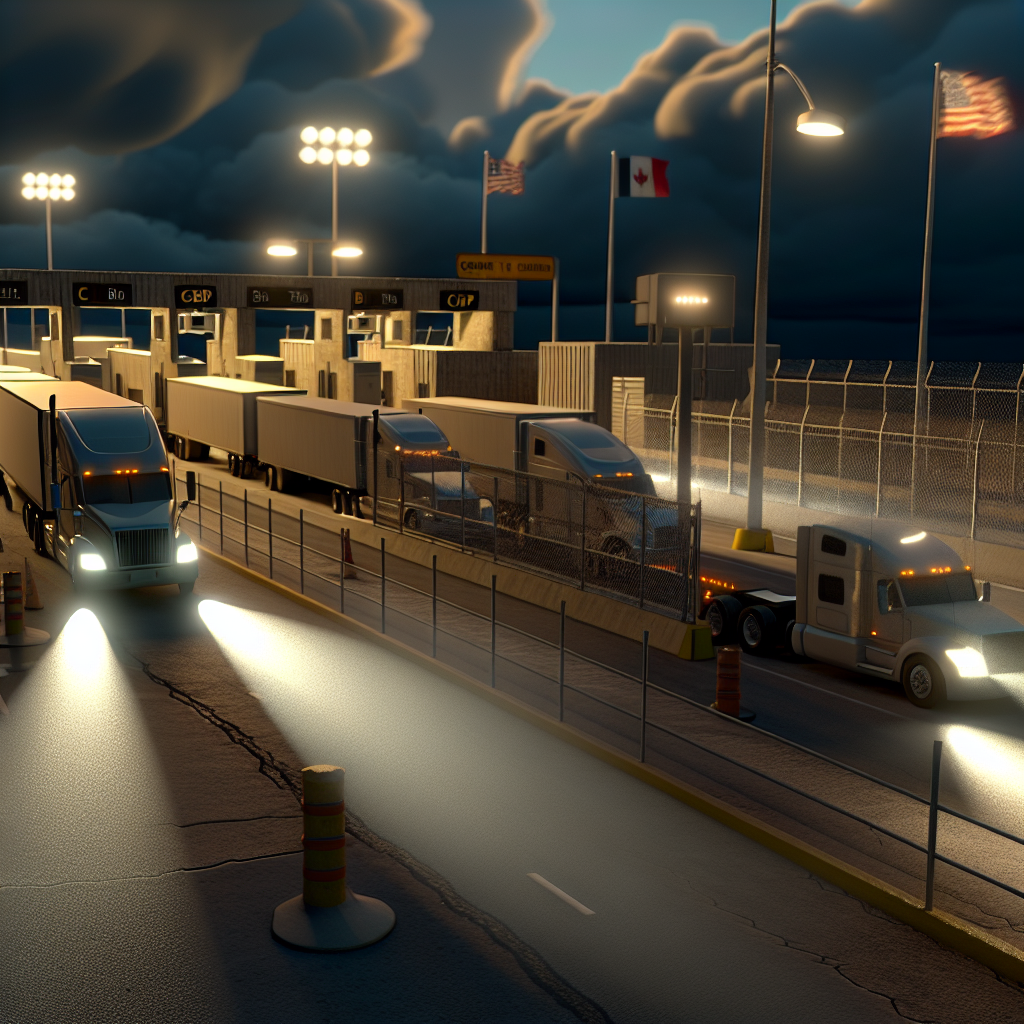
Laredo carriers say they’re navigating a two‑front storm: a federal pause on new work visas for foreign commercial drivers and aggressive immigration enforcement that’s touching yards, warehouses and roadways. Together, those pressures are tightening the driver pool in the nation’s busiest land port and forcing dispatchers to rework cross‑border operating models on short notice, according to carrier managers interviewed for the FreightWaves report that first spotlighted the crunch.
Fresh policy moves this week suggest the squeeze won’t ease quickly. The U.S. Department of Transportation confirmed it is withholding $40.6 million in safety funds from California for failing to enforce English‑language rules for truckers — a hard signal to inspectors nationwide that language proficiency must be checked and non‑compliant drivers sidelined. Carriers that rely on Spanish‑speaking cross‑border talent in markets like Laredo should brace for more roadside out‑of‑service calls as states step up enforcement.
The scrutiny is already measurable on the road: roughly 6,000 drivers have been parked since June for failing newly enforced English tests, according to a Washington Post analysis published Thursday. Even if most Laredo drayage is handled by experienced cross‑border drivers, that scale of pull‑offs tightens capacity at the margins, bids up short‑haul rates, and complicates just‑in‑time commitments for automotive, produce, and electronics moving through the World Trade and Colombia bridges.
At the diplomatic level, visa policy is turning more volatile. In the past 48 hours, Reuters reported the United States revoked visas for more than 50 Mexican politicians — a sign the administration is using visas more expansively as a pressure tool. While these cancellations target officials, not drivers, the broader message is clear: consular and visa decisions are fair game in a wider security agenda. Border‑dependent fleets should plan for longer lead times on any activity that relies on consular processing or background checks.
For Laredo operators, the operational playbook is shifting from growth to resilience. Recruiters are widening their nets for Class A drivers on the U.S. side, and fleets are modeling contingencies for higher no‑show risk at the ports of entry, longer dwell tied to document checks, and sporadic workforce disruptions when enforcement operations hit nearby warehouses. The FreightWaves reporting underscores a pattern carriers are now codifying in budgets: more spend on compliance, translation and training; more redundancy in driver pools; and tighter coordination with customs brokers to prevent paperwork snags from turning into service failures.
What to watch next: (1) whether other states emulate California’s funding fight by accelerating English‑proficiency enforcement — a move that could widen the driver shortfall in border markets; (2) any expansion of federal audits and worksite checks targeting transportation employers, which would add administrative load and legal exposure; and (3) signs from Washington that the pause on new truck‑driver work visas will persist into peak season planning, forcing more freight to shift to transfer models at the border. Each of these would amplify the headwinds Laredo carriers are already feeling.
The bottom line for shippers: expect more variability in Laredo capacity and transit times, not because freight demand is spiking, but because policy friction is constraining supply. Carriers that survive this phase will be the ones that treat compliance, documentation, and bilingual training as capacity investments — and that communicate early when loads need extra slack to clear the border cleanly.
Sources: FreightWaves, U.S. Department of Transportation, Reuters, Associated Press, The Washington Post
This article was prepared exclusively for TruckStopInsider.com. Republishing is permitted only with proper credit and a link back to the original source.