
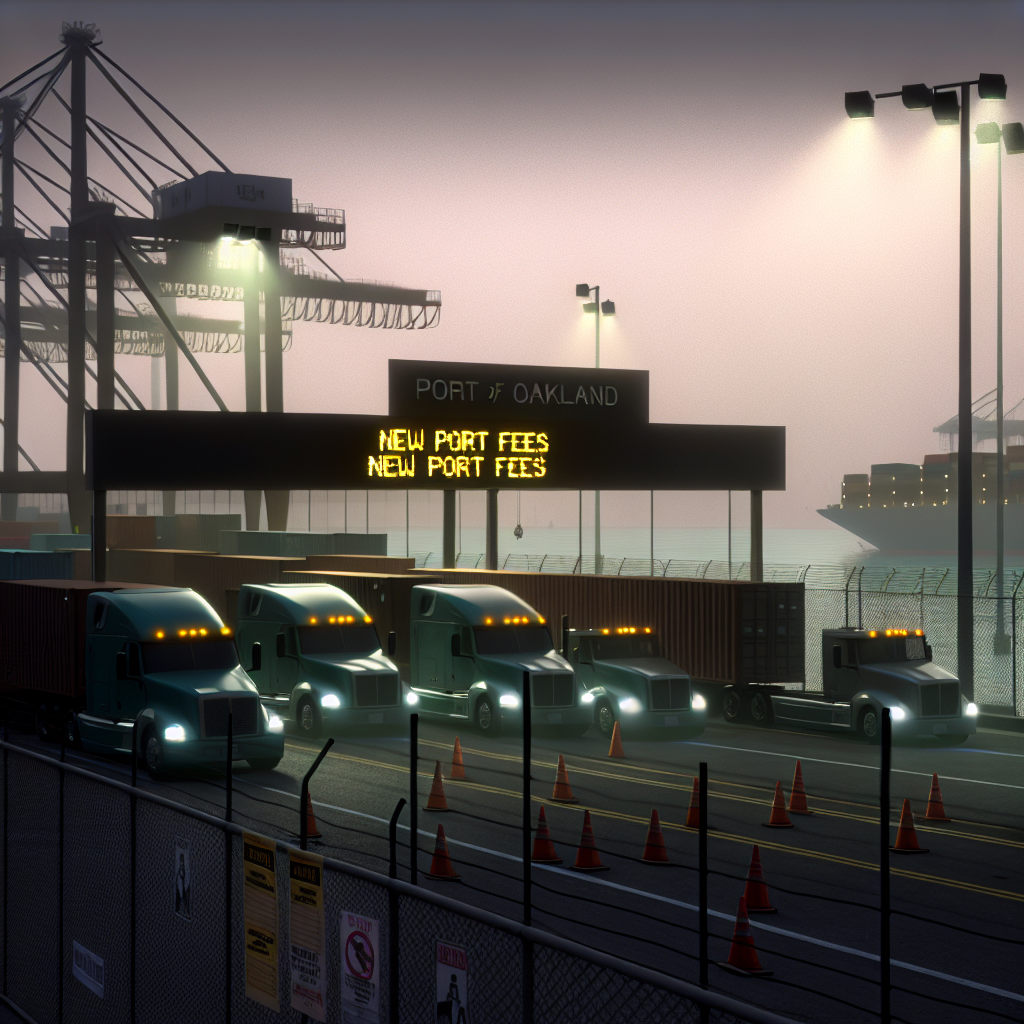
Tariff whiplash and shifting trade lanes are showing up at the Port of Oakland in the form of softer, less predictable container flows — a dynamic that translates directly into leaner drayage demand and more volatile week-to-week truck turns across Northern California. The latest developments suggest fewer boxes overall but sharper day-to-day swings as carriers and cargo owners recalibrate routings and timing.
The ocean-rate backdrop keeps tilting against volumes. New data this week show another step down in Asia–U.S. spot pricing, with Drewry’s World Container Index slipping again and Shanghai–Los Angeles and Shanghai–New York lanes hovering near multi‑year lows. Cheap freight tends to invite more blank sailings when carriers pull capacity to defend yields — a tactic that can bunch arrivals and whipsaw terminal flows, leaving truckers with feast-or-famine gate days.
Policy risk is amplifying that uncertainty. On October 20, President Donald Trump said he aims to strike a “fantastic deal” with China but floated a potential 100% tariff on November 1 if talks don’t deliver — a headline that encourages some importers to pause orders altogether rather than chase a last‑minute beat‑the‑deadline surge that transit times can’t realistically meet to the West Coast. For dray carriers, that means fewer inbound jobs now and a murkier outlook for November.
Meanwhile, the new U.S.–China reciprocal port fees that took effect October 14 are proving less disruptive — at least so far. Analysts report China has applied its criteria narrowly, with limited direct impact to U.S. operators to date, while a handful of carriers have tweaked vessel deployments to sidestep costs. The upshot for Oakland’s motor carriers: schedule changes remain possible, but a wholesale reroute away from the Bay Area gateway hasn’t materialized.
On the ground, conditions are fluid but not clogged. As of October 20, a forwarder operations snapshot showed three vessels waiting off Oakland — elevated but far from the gridlock that throttles truck productivity. Terminal operators are also leaning on extended hours: TraPac, for example, has night gates posted through Thursday this week, a tool fleets can use to smooth driver turns and avoid daytime bunching.
Costs are easing in some places and rising in others. California on‑highway diesel averaged $4.898 per gallon for the week ended October 20, down four cents week over week — welcome relief for drayage margins. But rail pass‑throughs are moving the other way: Union Pacific set its domestic intermodal fuel surcharge at 31% for the week of October 27, a reminder that door‑to‑door intermodal alternatives into and out of Northern California will carry higher ancillary charges even as line‑haul demand softens.
For motor carriers serving Oakland, the near‑term playbook is about agility. Expect a thinner overall import stream through the end of October, punctuated by blank‑sailing‑driven bunching that makes dispatch planning tricky. Use night gates where available to lift turns per driver, and get proactive on accessorials (free‑time, demurrage mitigation, flip and gate fees) to defend margins on lower‑volume weeks. Keep an eye on carrier service notices tied to the new port fees — even if impacts have been modest so far, small rotation tweaks can ripple quickly through gate queues and chassis positioning. And given diesel’s slight downtick, consider timing refuels and line‑haul pricing adjustments now, before any policy shock on November 1 alters the calculus again.
Sources: FreightWaves, ICIS, The Associated Press, Container News, Zencargo, U.S. Energy Information Administration, Union Pacific, TraPac
This article was prepared exclusively for TruckStopInsider.com. Republishing is permitted only with proper credit and a link back to the original source.