Covenant Logistics is leaning into a “pain before progress” playbook this quarter. On the company’s earnings call Thursday, CEO David Parker said margins remain under strain as the carrier trims underutilized assets and prioritizes contract freight with better returns, a stance he framed as necessary while truckload capacity slowly tightens. His comments followed results that showed the asset-light units holding up better than the truckload businesses in a market that is stabilizing but not yet recovering.
The numbers explain the posture. For the third quarter, adjusted EPS was $0.44 on total revenue of about $297 million. Dedicated truckload was the bright spot — freight revenue rose roughly 11% as the fleet expanded to 1,539 tractors — while Expedited revenue fell about 8% amid lower utilization. Parker flagged the cost drag from “under‑utilized equipment” and said the mix shift toward higher-service, shorter-haul work is still maturing operationally.
That caution mirrors what bigger peers are seeing. Knight‑Swift reported a sharp year-over-year profit drop despite modest top-line growth, citing impairments and elevated insurance costs. Management said demand is “stable” but seasonal gains are uncertain — corporate code for a market grinding toward balance, not sprinting.
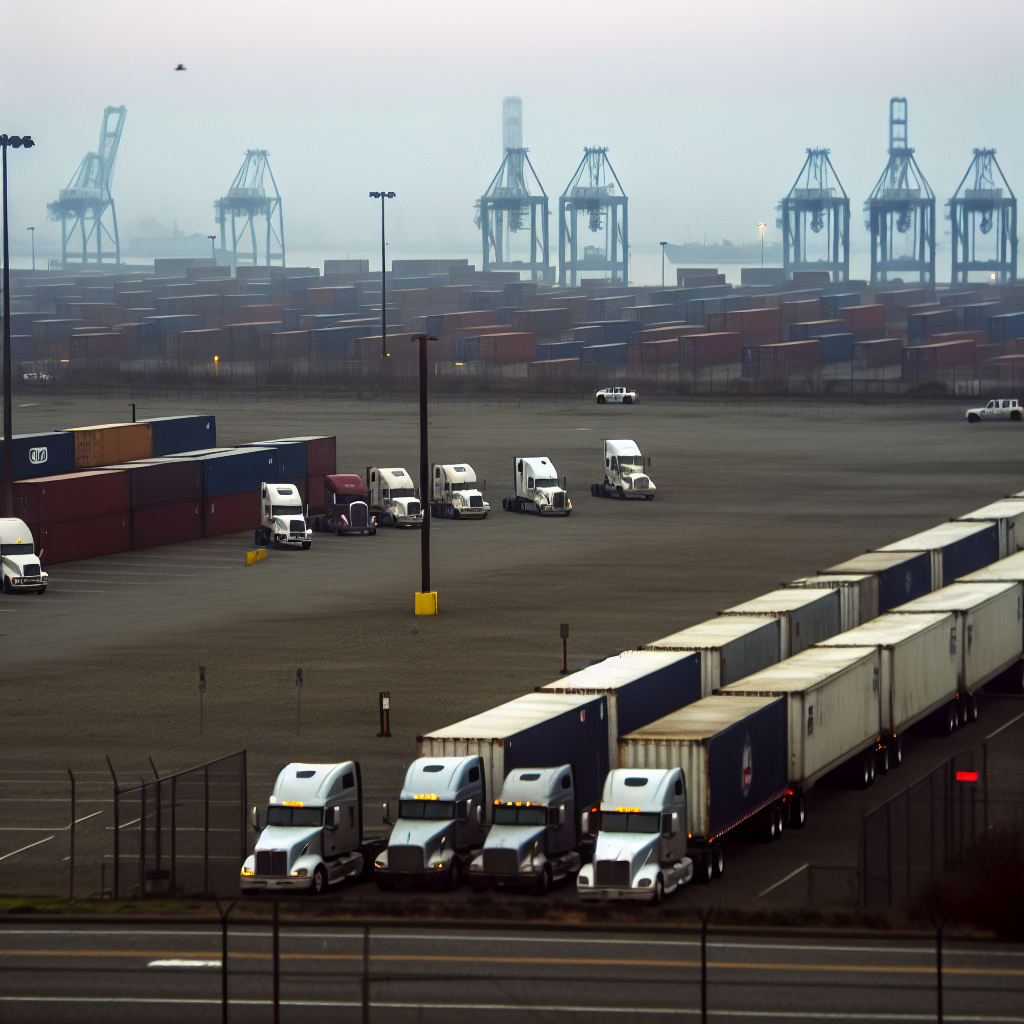
Inbound freight signals won’t give truckers quick relief either. DAT said Tuesday that monthly U.S. container imports are likely to dip below 2 million TEU for the rest of the year as retailers work through front‑loaded inventories amid tariff noise — a headwind for port drayage and transload volumes that typically feed domestic truckload demand. Even so, linehaul pricing on top lanes has been edging up from summer lows, suggesting capacity, not demand, is starting to do more of the heavy lifting.
On the water, carriers forced through mid‑October GRIs that pushed Asia–U.S. West Coast rates up 18% week over week and nudged East Coast rates higher too. Freightos notes the increases arrived in a slow‑season environment and may prove fleeting, but they can still spark short bursts of port‑side truck demand and imbalanced flows — another reason why fleets like Covenant are keeping extra powder dry on discretionary assets.
One genuine tailwind: diesel. EIA’s latest weekly read shows the national on‑highway average slipping to $3.62 per gallon for the week of October 20, the lowest since mid‑June. Overdrive calculates a 13‑cent drop for October to date, easing cost pressure just as carriers face higher claims and equipment expenses. That combination — cost relief at the pump, stubborn nonfuel inflation elsewhere — is why management teams are talking more about tightening networks than chasing volume.
Why it matters for fleets: the fastest way to better results isn’t a demand snapback; it’s sweating assets and mix. Covenant’s quarter underscores where carriers have leverage — dedicated growth, disciplined exits from underperforming lanes, and asset‑light services that don’t require adding tractors. Expect more rightsizing and selective contract renewals as carriers wait for capacity attrition to translate into pricing power.
Why it matters for shippers: trucking’s balance is improving for the first time in years, but not uniformly. If ocean carriers sustain GRIs into November, coastal markets could see pockets of tightness and spot volatility even as the interior stays well supplied. Pair that with gradually firmer linehaul benchmarks and a cheaper fuel backdrop, and the best near‑term strategy is to lock core lanes and use spot tactically — precisely the playbook carriers like Covenant are preparing to meet.
Sources: FreightWaves, Covenant Logistics, GlobeNewswire, Seeking Alpha, DAT Freight & Analytics, U.S. Energy Information Administration, Transport Topics, Overdrive
This article was prepared exclusively for TruckStopInsider.com. Republishing is permitted only with proper credit and a link back to the original source.