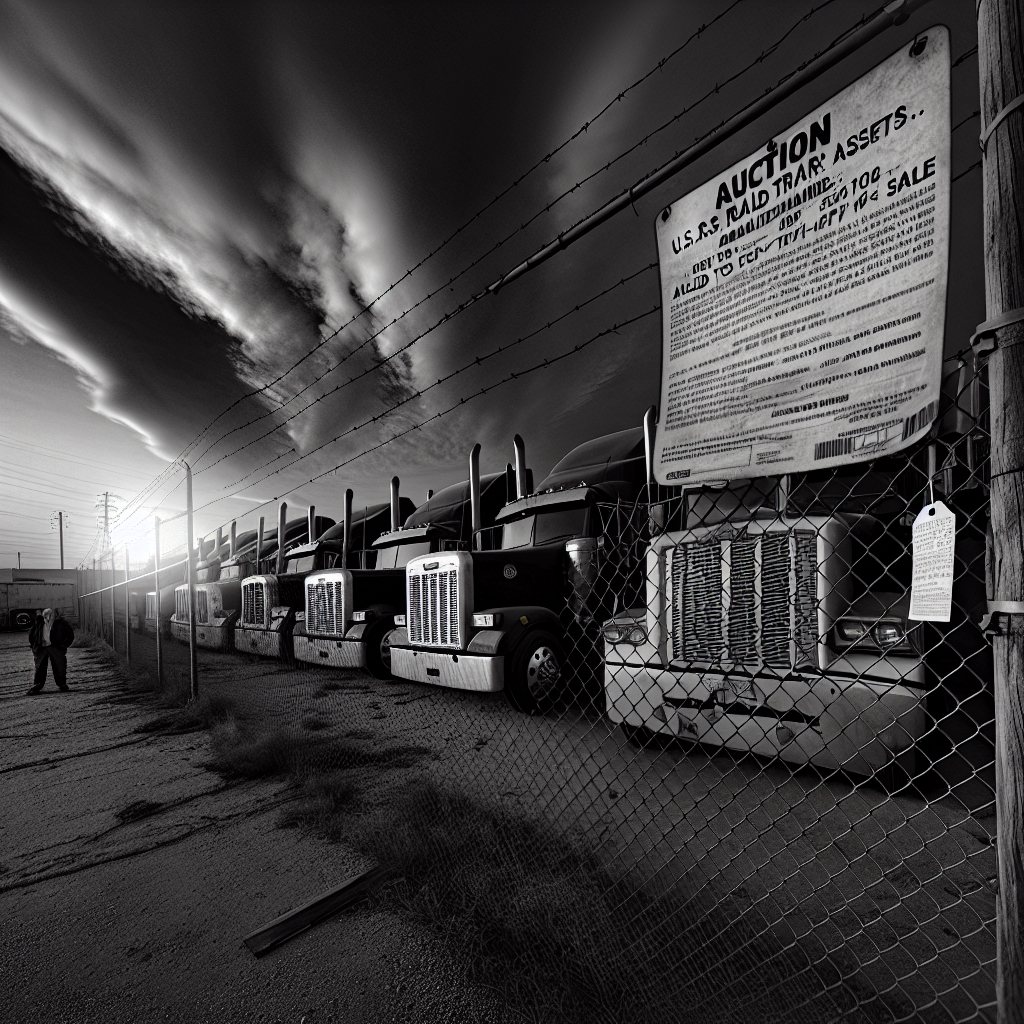
USA Truck is back in play. On Thursday, Oct. 23, DSV said the Arkansas-based carrier it inherited through the Schenker takeover is being marketed for sale, and the company’s latest interim filing classifies a portion of “Schenker US Road” operations as a disposal group held for sale and reported as discontinued operations. That accounting move signals intent to exit and gives would-be buyers a cleaner view of the asset.
The reversal comes less than three years after DB Schenker bought USA Truck for about $435 million ($31.72 a share) and only months after DSV closed its acquisition of Schenker in April 2025. DSV’s rationale is straightforward: the group is integrating Schenker while doubling down on an asset-light road model in the U.S., and a company-owned longhaul fleet doesn’t fit.
Operationally, nothing changes overnight for shippers or drivers. USA Truck continues to run out of Van Buren, Arkansas, with a fleet the local press recently pegged at more than 2,000 tractors and 6,500 trailers. But the “for sale” sign invites strategic and private equity suitors that want immediate scale in dry van and dedicated—especially those looking to bolt on a national asset-based network rather than build one in a choppy freight market.
DSV’s timing lines up with its broader financial posture. In its Oct. 23 update, the company trimmed its full-year profit outlook amid soft demand and FX headwinds even as third-quarter operating profit slightly topped expectations. Carving out U.S. road operations for disposal lets DSV concentrate capital on higher-return, asset-light activities while it harvests Schenker integration synergies elsewhere.
The interim report adds important texture: as Schenker is folded in, DSV is consolidating groupage infrastructure, optimizing distribution and linehaul, and reducing terminal count—all within a margin-improvement program. Labeling the U.S. road unit as “held for sale” and “discontinued” aligns those network actions with the balance sheet and makes a transaction easier to execute.
For trucking executives, the takeaway is twofold. First, USA Truck’s return to the market is about strategy fit, not distress—an asset-heavy TL platform is being divested by a buyer leaning hard into brokerage-style road operations. Second, the buyer universe should be broad: a large U.S. truckload carrier seeking density, a PE sponsor eyeing an operational turnaround play, or a regional fleet wanting national reach. Whoever prevails will inherit scale, a cross-border footprint, and customer relationships that were attractive enough for Schenker to pay up in 2022—and are still valuable today.
What to watch next: whether DSV discloses a timetable or prospective buyer interest in subsequent filings, and how any deal treats dedicated contracts, equipment leases, and terminal real estate. Until then, stakeholders should expect continuity of service, with the sale process running in the background.
Sources: FreightWaves, Commercial Carrier Journal, Talk Business & Politics, Reuters, MarketScreener
This article was prepared exclusively for TruckStopInsider.com. Republishing is permitted only with proper credit and a link back to the original source.