
U.S.–Canada trade negotiations were abruptly put on ice late Friday after President Donald Trump declared talks “terminated,” faulting an Ontario government TV spot that splices audio from a 1987 Ronald Reagan address to argue that tariffs backfire on American workers. The move instantly injects new uncertainty into cross‑border supply chains that depend on predictable rules as year-end shipping ramps up.
Ontario Premier Doug Ford said he will pause the ad buy starting Monday, after speaking with Prime Minister Mark Carney, but the spots will continue to air through the weekend — including during the World Series — ensuring the message keeps reaching U.S. audiences while officials try to reopen the door to negotiations next week.
Trump blasted the commercial as “fake” and alleged — without evidence — that it was designed to sway a pending U.S. Supreme Court review of his tariff regime. The Ronald Reagan Presidential Foundation criticized the ad as a misrepresentation that used the late president’s words without permission and said it is reviewing legal options. Ontario has said it relied on Reagan’s public remarks; the province budgeted roughly C$75 million (about US$54 million) for the campaign, which aired widely on U.S. networks.
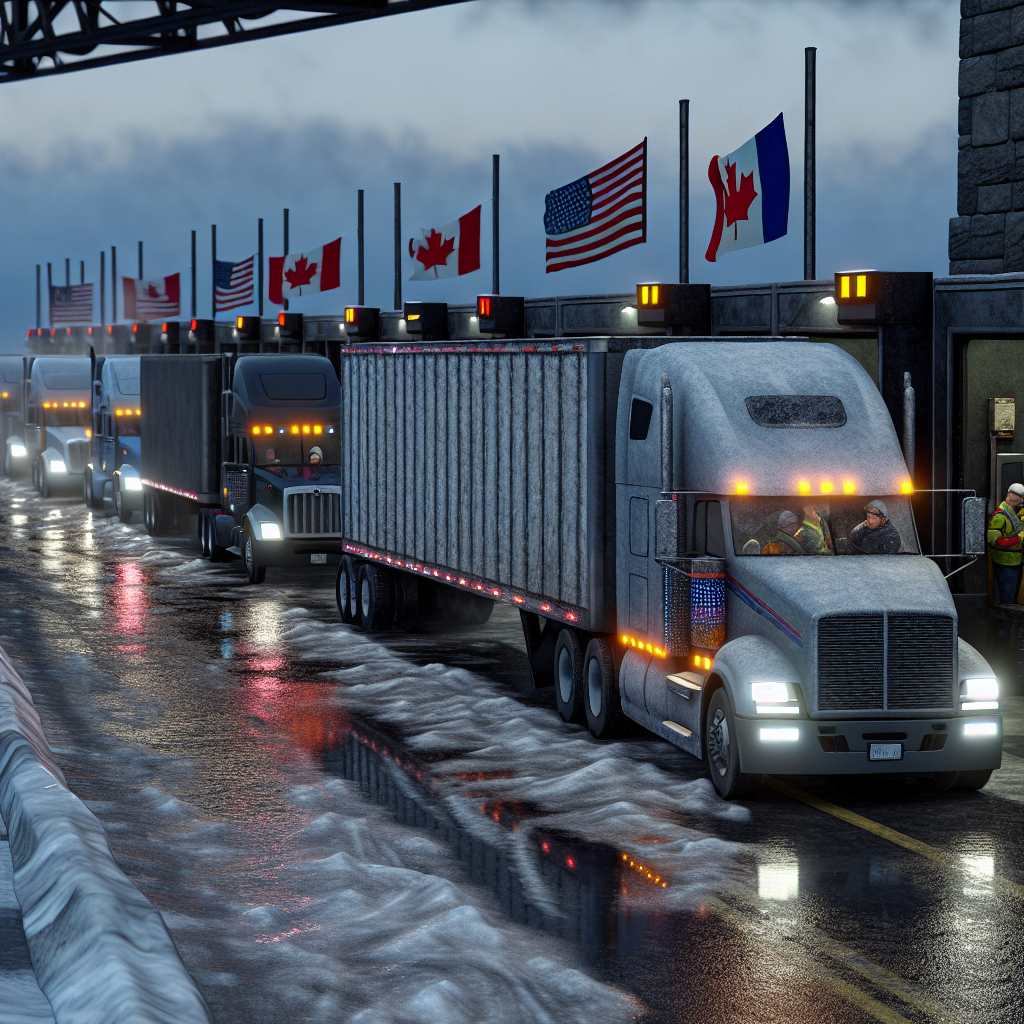
For truckers and shippers, the headline risk is less about immediate new duties and more about what a negotiating freeze does to planning. With tariff relief talks stalled, procurement teams face a longer period of status quo policy — and ongoing volatility in sector‑specific levies — that complicates bids, rate locks and inventory positioning on lanes like Windsor–Detroit, Buffalo–Fort Erie and Blaine–Surrey. Any surprise policy lurches would ripple quickly through auto, metals and lumber freight that zigzags across the border multiple times before final assembly.
The stakes are enormous: more than C$3.6 billion in goods and services cross the border daily, and three‑quarters of Canadian exports head to the United States. Even without new measures, a prolonged chill in talks can slow investment decisions and keep customs and compliance teams in “defensive mode,” tightening capacity on certain corridors as shippers hedge with extra buffer stock and alternate routings.
Why it matters now: the ad war landed right as officials touted incremental progress in sector tracks like steel, aluminum and energy. By slamming the brakes, Washington removes near‑term prospects for targeted de‑escalation that carriers had hoped would firm up contract planning for 2026. In practical terms, brokers and fleets should expect more “stop‑start” signals from customers tied to metals and autos, and a bumpier spot market on the Great Lakes and Prairie gateways if manufacturers pad lead times or reschedule cross‑border runs.
Context on the controversy: the Ontario spot strings together lines from Reagan’s April 1987 radio address warning that high tariffs trigger retaliation and job losses. Fact‑checkers noted the ad mixes segments out of sequence, but the cited lines do appear in the original address — a nuance that underscores why the Reagan Foundation objected to how it was presented. Trump has seized on the dispute to claim Reagan “loved tariffs,” while free‑trade passages dominate the clip.
What to watch next for trucking and logistics teams:
- Short-term freight behavior: Expect precautionary rescheduling by auto and metal shippers that could create mini-surges and soft patches week to week on key crossings until talks resume. Keep driver networks flexible and tighten appointment discipline at border‑adjacent yards.
- Legal calendar overhang: The Supreme Court’s pending review of tariff authorities is now a narrative driver for policy headlines. Even if legal outcomes are months away, headline risk can whipsaw shipper sentiment and bid timing. Build tariff‑assumption language into contracts and RFPs.
- Visibility and compliance: Re‑verify USMCA certifications and rules‑of‑origin documentation with customers; even unchanged rules will draw extra scrutiny when politics run hot.
- Customer communication: Proactive updates to Canadian and U.S. clients on border transit times and alternative routings can preserve wallet share if production schedules wobble.
The bottom line: Friday’s freeze doesn’t change a tariff schedule overnight, but it does stall the only mechanism that could have eased it. For carriers, that means navigating a familiar pattern — steady freight flowing across a tense political backdrop — with sharper attention to contracts, compliance and contingency routing until Ottawa and Washington are back at the table.
Sources: FreightWaves, The Washington Post, Associated Press, Politico, Time, Al Jazeera
This article was prepared exclusively for TruckStopInsider.com. Republishing is permitted only with proper credit and a link back to the original source.