
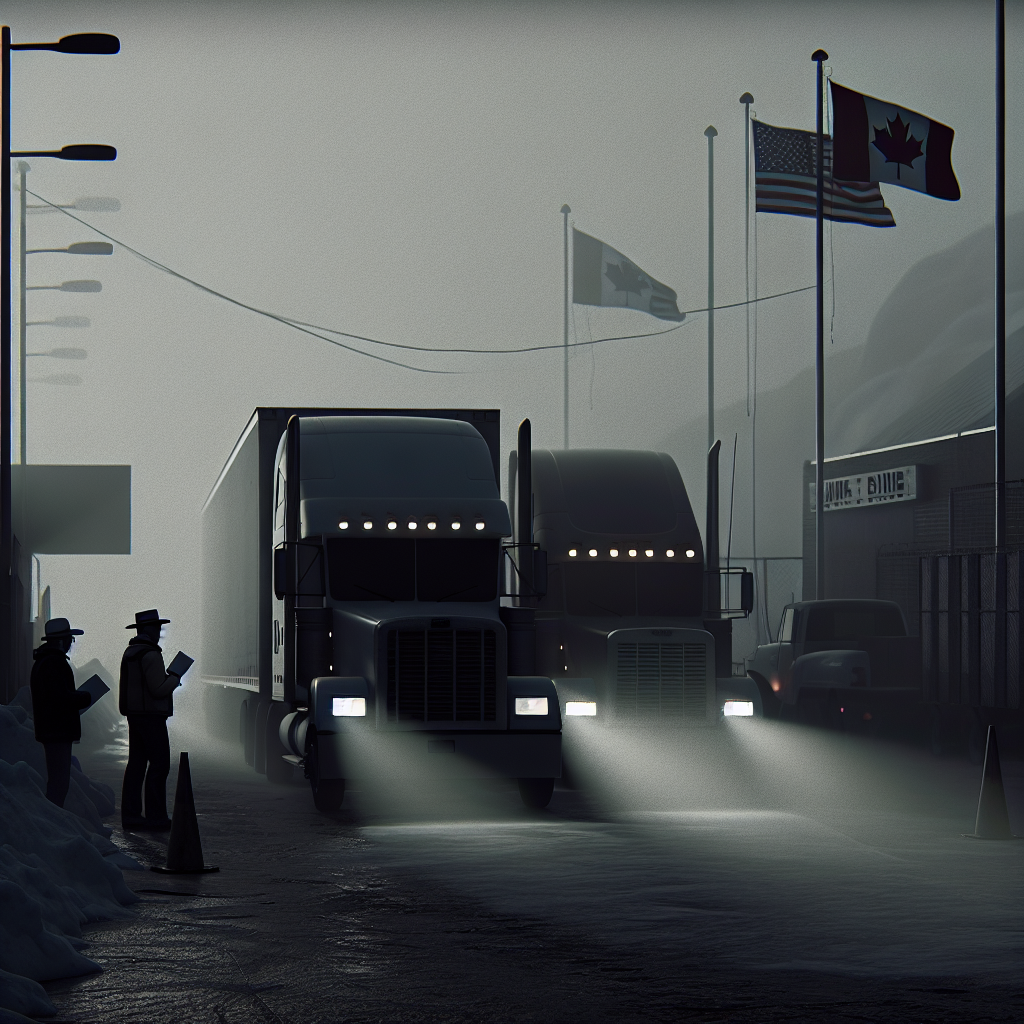
North American shippers were handed another curveball this weekend after President Donald Trump abruptly declared trade negotiations with Canada “terminated,” blaming a television spot from Ontario that uses Ronald Reagan’s 1987 remarks warning about the risks of high tariffs. The move interrupts weeks of grinding, technical talks aimed at tempering U.S. duties on Canadian goods — and reintroduces uncertainty for cross‑border trucking just as peak automotive and holiday flows intensify.
Within hours of the backlash, Ontario Premier Doug Ford said he would pause the ad campaign on Monday, October 27, after consulting Prime Minister Mark Carney — but not before keeping the spot on air through Games 1 and 2 of the World Series this weekend to ensure it reaches a U.S. audience. Ottawa, for its part, signaled it’s ready to pick up the threads of the talks as soon as Washington is willing.
The advertisement stitches together passages from Reagan’s radio address on free and fair trade to argue that broad tariffs invite retaliation and job losses. Trump labeled the spot “fake,” accusing Canada of using it to sway a looming Supreme Court test of his tariff powers. The Reagan Presidential Foundation criticized the editing and said it had not authorized the use of the remarks, adding to the political firestorm around the negotiations.
Why this matters for trucking: even if freight keeps moving, every breakdown in diplomacy ripples through rate sheets and load plans. The current chill lowers the odds of near‑term relief on duties that have complicated pricing for autos, steel, aluminum and lumber — sectors that anchor many cross‑border lanes. Carriers that serve integrated supply chains in Ontario and the U.S. Midwest are likely to see more last‑minute schedule changes and cautious order patterns from shippers until talks restart.
Two near‑term signposts now shape planning horizons. First, Ford’s pause takes effect after the weekend, potentially clearing space for negotiators next week if the White House decides to re‑engage. Second, the Supreme Court is slated to begin hearings on the administration’s tariff authority on November 5 — a proceeding the president explicitly referenced when blasting the ad — injecting legal uncertainty that procurement and logistics teams will have to price into fourth‑quarter decisions.
For carriers, the operational playbook is less about border closures and more about volatility management. Much of the cross‑border flow still qualifies for USMCA preferences, but sudden shifts in sentiment can stall incremental fixes that would ease cost pressure in auto and metals freight. Expect tighter lead times, more frequent repricing requests on Windsor–Detroit and Buffalo–Niagara lanes, and elevated demand for customs brokerage support as shippers revisit rules‑of‑origin documentation to defend duty‑free status where possible.
The political crosswinds are also shaping the narrative beyond Washington and Ottawa. After Trump’s late‑night declaration, Canada’s business lobby urged calm, arguing the underlying trade framework remains robust even as negotiations lurch from flare‑up to flare‑up. That message — stay focused on the long game — is cold comfort to truckers quoting lanes tied to tariff‑exposed commodities, but it suggests companies should not expect a wholesale rewrite of border rules overnight.
What to watch next for freight planners: whether the White House acknowledges Ontario’s pause and agrees to resume working‑level talks; any signal from either side on targeted sectoral carve‑outs that could ease pressure on autos or metals; and the Supreme Court’s early tone on tariff authority, which could either harden negotiating positions or unlock a path to narrower, more predictable measures. Until then, prudence argues for building a little slack into cross‑border schedules, validating tariff classifications on recurring part numbers, and preparing for spot‑market bumps in key Great Lakes corridors.
Sources: FreightWaves, AP News, The Washington Post, Reuters
This article was prepared exclusively for TruckStopInsider.com. Republishing is permitted only with proper credit and a link back to the original source.