
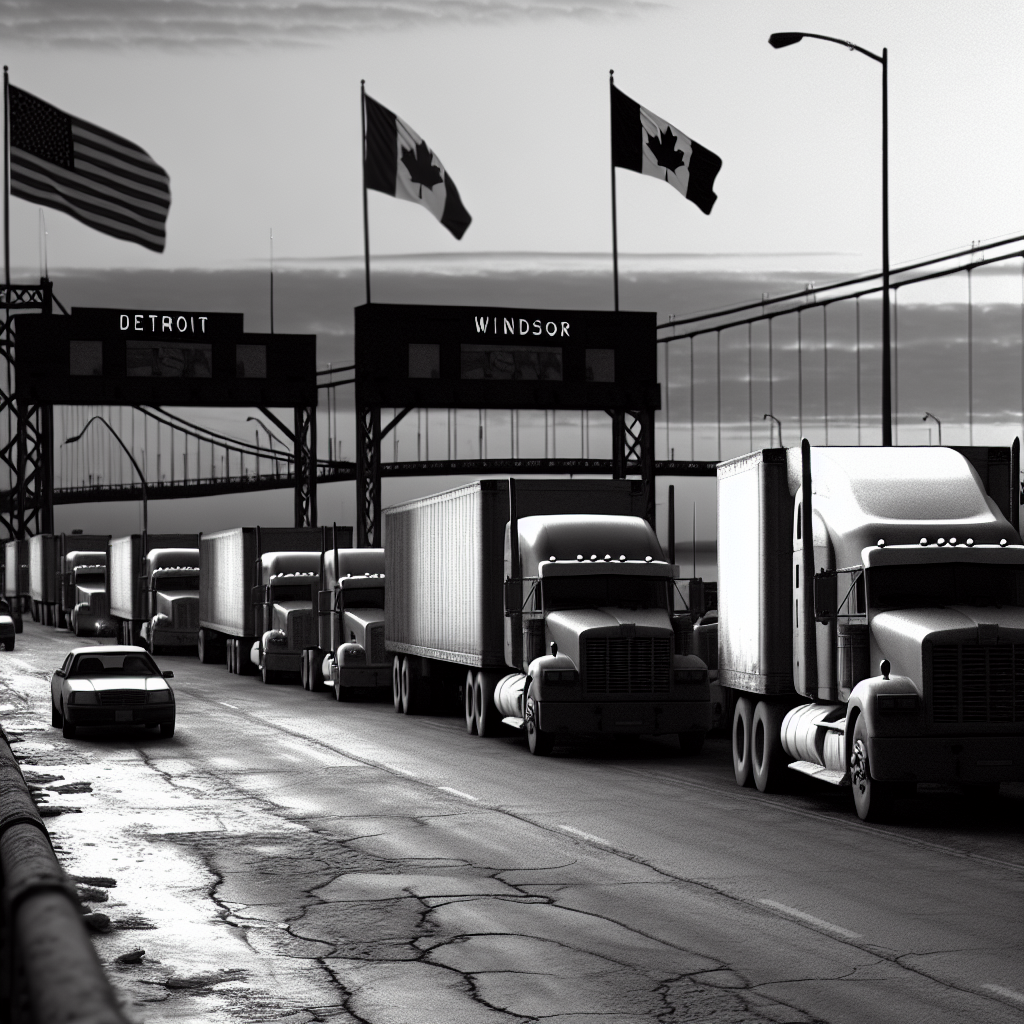
U.S.–Canada trade diplomacy was thrown into reverse late Thursday, Oct. 24, when President Donald Trump declared negotiations “terminated,” blaming a new Ontario government television spot that stitches lines from a 1987 Ronald Reagan address to argue against tariffs. The White House framed the ad as deceptive and politically meddlesome; Ontario insists it’s a straightforward use of a public speech. For cross‑border carriers, it’s the latest reminder that policy volatility—not freight demand—may be the biggest near‑term risk to pricing and planning.
The Reagan Presidential Foundation criticized the spot for “misrepresenting” the former president’s remarks. But an independent fact‑check found the ad’s quotations align with Reagan’s text, even if edited for flow—undercutting the central charge that the ad is “fake.” Trump has also alleged the campaign aims to sway a looming Supreme Court test of his tariff authority, currently slated for Nov. 5.
By Friday, Ontario Premier Doug Ford said the province would pause the ad buy effective Monday to lower the political temperature and clear a path back to the table—though he kept the spots on air through the weekend’s World Series games between the Blue Jays and Dodgers. The tactical retreat signals that Ottawa and Queen’s Park want the negotiations restarted quickly, even if the message reached its intended U.S. audience.
On Saturday, Oct. 25, Trump escalated again, posting that he will tack on an additional 10% tariff “over and above” current Canada rates. As of Sunday, that pledge has been made via social media while trade practitioners await formal implementation instructions. For carriers and shippers, the headline alone is enough to trigger weekend calls about cost pass‑throughs and contract language.
Prime Minister Mark Carney, departing for Asia on Friday, said Canada is ready to resume talks whenever Washington is ready, highlighting recent “detailed” progress at the working level. Both leaders are due at upcoming regional summits; Trump has publicly ruled out a bilateral meeting for now, prolonging uncertainty for supply chains that depend on predictable policy signals.
What it means for trucking: volatility is the new baseline. Cross‑border freight rarely stops on political headlines, but price and paperwork can change quickly when tariff schedules move. If the additional 10% materializes, importers will scramble to reprice landed costs and, in turn, revisit routing guides, surcharge clauses and modal choices. Auto, metals and energy—sectors with dense Ontario–Midwest lanes and time‑sensitive, just‑in‑sequence flows—are especially exposed to even small duty changes that cascade through bills of material and carrier awards. Expect more short‑cycle bid events, selective mini‑bids on high‑duty SKUs, and tighter accessorial enforcement as both shippers and fleets try to protect margins.
Border operations are also vulnerable to policy shocks. Even without new paperwork today, the mere prospect of tariff tweaks tends to produce a compliance scramble: brokers push importers for clarifications on USMCA origin files; buyers split POs to segregate duty‑sensitive SKUs; and distribution centers pull ahead or defer loads to dodge cost cliffs. Carriers should be ready for choppy tender volumes around key crossings such as the Ambassador Bridge and the Blue Water Bridge as customers time entries and adjust inventory strategies.
Playbook for carriers and brokers this week: communicate and document. Ask customers which SKUs are duty‑sensitive under multiple tariff scenarios and whether contracts allow fuel‑like pass‑through for government‑imposed charges. Verify that commercial invoices and certificates of origin are current and that any engineering changes on parts are reflected in USMCA claims. Build cushions into pickup windows for compliance holds, and consider flexible dwell pricing to offset unplanned waits. In bid talks, prioritize shorter terms with reopeners tied to tariff actions rather than locking in year‑long rates on volatile lanes.
The bigger picture: the Reagan ad dust‑up is a symptom, not the disease. The tariff regime’s legality will get fresh scrutiny at the Supreme Court in early November, and both sides have political incentives to posture in public while career negotiators do the quiet work. For trucking, the lesson is to treat policy headlines like weather alerts: you can’t stop them, but you can route around them—if you’re watching the radar and you’ve pre‑negotiated how costs flow when the storm hits.
Sources: FreightWaves, The Washington Post, TIME
This article was prepared exclusively for TruckStopInsider.com. Republishing is permitted only with proper credit and a link back to the original source.