Why this matters for U.S. trucking
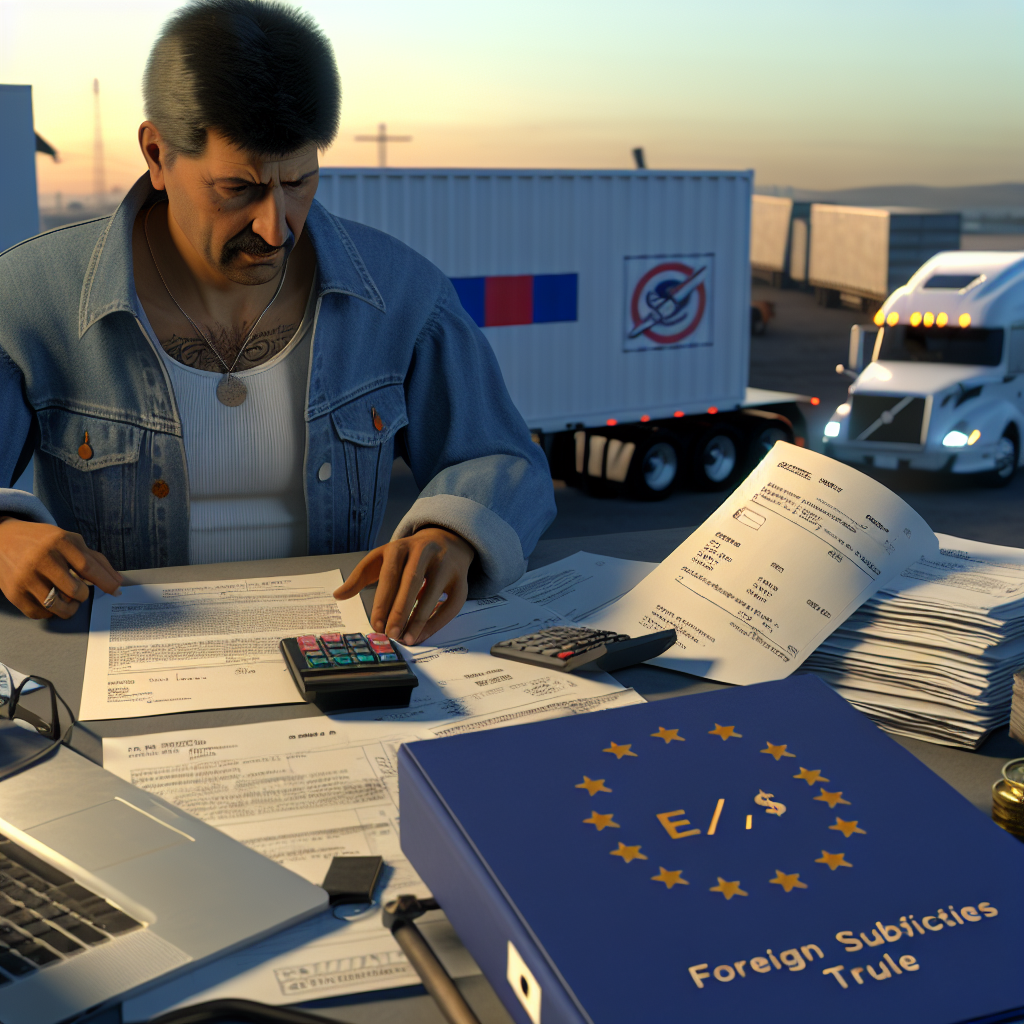
Europe’s Foreign Subsidies Regulation (FSR) has moved from theory to active enforcement, and its reach now spans public procurement, mergers and acquisitions, and ex officio probes. For U.S. truck makers, powertrain suppliers, charging providers, and logistics tech firms eyeing European contracts or acquisitions, subsidies or tax credits received at home — including Inflation Reduction Act (IRA) incentives — can trigger disclosures, delays, and even deal or contract blocks in the EU.
The short version: thresholds and timelines
Public procurement: If a contract is valued at €250 million or more (or €125 million when tenders are split into large lots), bidders must either notify all “foreign financial contributions” (FFCs) of at least €4 million per non‑EU country over the past three years, or file a declaration confirming they are below that threshold. Awards are paused while the European Commission (EC) reviews.
M&A: Concentrations must be notified if the EU target (or merging party/joint venture) has at least €500 million in EU turnover and the parties received more than €50 million in FFCs over three years. The EC can clear, condition, or prohibit a deal.
New guidance: On January 9, 2026, the EC adopted FSR Guidelines clarifying how it assesses distortions, applies the balancing test, and “calls in” below-threshold cases — further tightening predictability and scrutiny for cross‑border truck-tech plays.
What counts as a “foreign financial contribution” (and why IRA aid matters)
FSR defines FFCs broadly: grants, loans, guarantees, equity injections, exclusive rights, tax exemptions or credits, and even some purchases by public bodies. Several tax analyses note that “green” tax credits under the U.S. IRA can qualify as reportable FFCs when a beneficiary competes for large EU contracts or engages in notifiable M&A. In other words, U.S. incentives that help you build batteries, hydrogen systems, charging depots, or zero‑emission trucks can become EU disclosure items — and, if deemed distortive, could lead to remedies.
Enforcement is real — and growing
Early FSR actions have centered on Chinese bidders in rail, solar, wind, and security equipment tenders; several withdrew from EU procurements after the EC opened in‑depth probes — a signal that the tool can bite. While the first wave wasn’t aimed at U.S. firms, the mechanism is country‑agnostic and available for any non‑EU subsidy.
On the deal side, the Commission’s conditional clearance of e&’s acquisition of PPF Telecom shows how state‑linked financing and guarantees can draw remedies under FSR. That logic could extend to truck-tech acquisitions backed by public financing abroad.
Where U.S. fleets and suppliers could be exposed
- Large public tenders: National rollouts of zero‑emission freight corridors, depot charging, grid upgrades, municipal heavy‑duty vehicle fleets, or smart‑road projects can easily exceed €250 million, triggering FSR filings for U.S. OEMs, charging networks, hydrogen developers, or telematics integrators that have received IRA or other U.S. incentives.
- Consortia bids: FSR looks through to holding companies, non‑autonomous subsidiaries, and “main” subcontractors/suppliers on the same bid. A U.S. partner’s credits can force the whole team to notify.
- Cross‑border M&A: Buying an EU e‑truck startup, battery recycler, or charging operator may require an FSR filing in parallel with EU merger control if thresholds are met.
Penalties, standstill — and practical steps
Failing to notify when required, or trying to circumvent the rules, can draw fines up to 10% of global turnover, and the EC can block contract awards or deals. There’s also a standstill obligation while the EC reviews, which can add weeks to months to procurement or deal timetables.
- Map your subsidies now: Build a group‑wide register of all non‑EU financial contributions since at least 2020 — grants, loans, guarantees, tax credits (including IRA), and state‑linked investments — and keep it current.
- Plan filings early: For large EU bids or in‑scope M&A, engage in pre‑notification with the EC to clarify scope and seek waivers where possible; align procurement or deal timelines with potential FSR review clocks.
- Vet consortium exposure: Check whether major subcontractors/suppliers on EU bids have non‑EU support that could push you over thresholds.
- Prepare a defense: If benefits are alleged to distort competition, be ready to show market‑terms financing or positive effects (e.g., faster decarbonization of EU freight) under the FSR’s balancing test.
Bottom line for trucking
The FSR won’t stop U.S. truck and supply‑chain innovators from competing in Europe — but it does add a new compliance lane. If your growth plan includes EU mega‑tenders or acquisitions, treat IRA‑related and other U.S. support as data you’ll likely need to disclose, and budget time for Brussels to kick the tires. Early preparation can keep your bid or deal on the road.
Sources Consulted: Tax Notes; European Commission (DG GROW and DG COMP); Public Buyers Community; U.S. Department of Commerce (trade.gov); Baker Botts; Reed Smith; PwC.
Need to file your Form 2290?
Join thousands of owner-operators and carriers who trust HeavyTax.com for fast and easy HVUT e-filing.
This article was prepared exclusively for truckstopinsider.com. For professional tax advice, consult a qualified professional.