
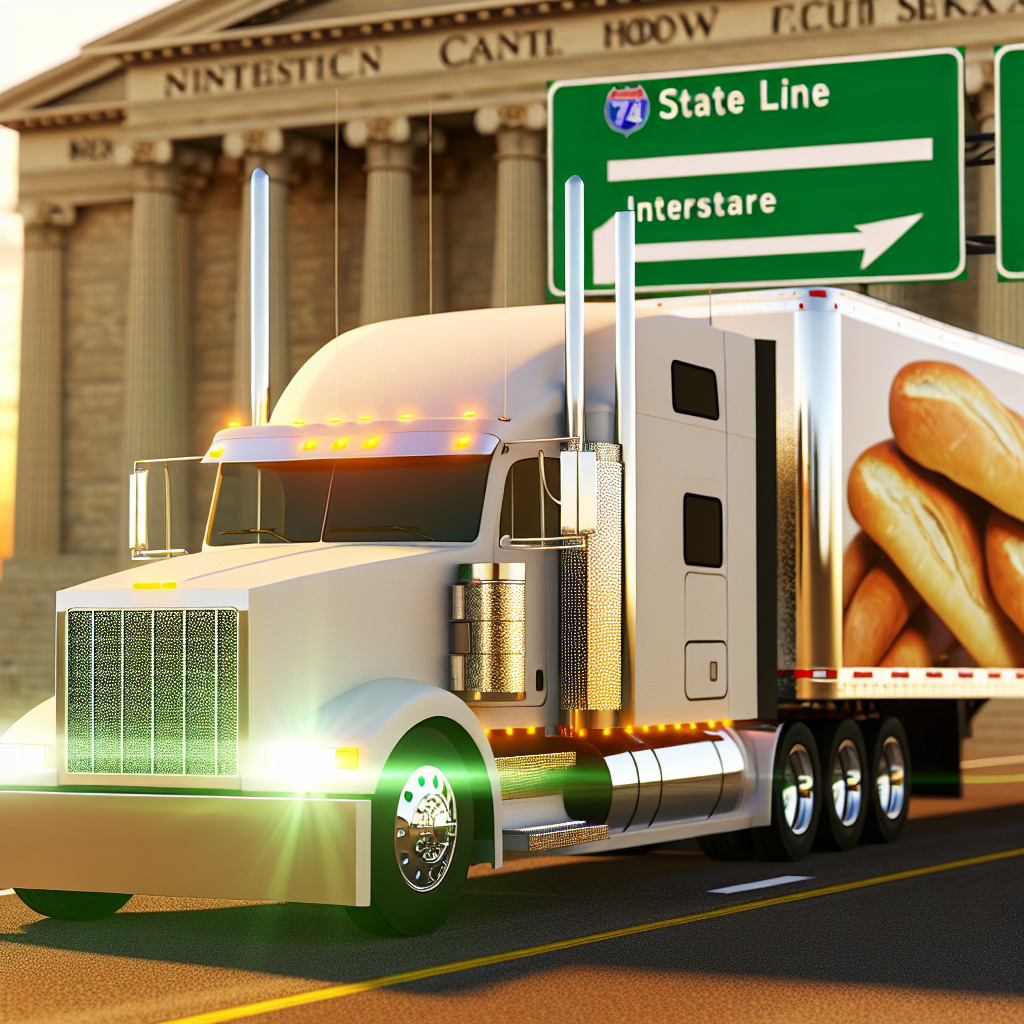
The U.S. Supreme Court on October 20 granted review in Flowers Foods, Inc. v. Brock, a case that asks whether local delivery drivers who move bread and snack cakes entirely within one state are nonetheless “transportation workers” engaged in interstate commerce because the goods arrived from out of state. The answer will determine whether those drivers can be forced into arbitration—or can sue in court—under the Federal Arbitration Act’s Section 1 exemption.
The petition comes from a Colorado distributor for Flowers Foods who delivers product from a warehouse to nearby retailers. The Tenth Circuit previously allowed him to proceed in court, reasoning that last‑mile distribution can be part of a continuous interstate journey even if the driver never crosses a state line. With cert granted, the justices will now decide how far the “interstate commerce” label stretches for final‑mile workers.
Why trucking and last‑mile carriers are watching: A ruling that narrows the exemption would arm fleets and shippers with stronger tools to compel arbitration of wage-and-hour and misclassification claims. A broad reading, by contrast, could open the door to more class actions by drivers who argue they are embedded in the interstate flow of goods—even on purely intrastate routes. That would ripple across direct‑store‑delivery models in food, beverage, parcel, and retail, where many operators rely on independent distributor agreements and standardized arbitration clauses.
The stakes are amplified by a growing split among federal appeals courts over how to apply the exemption. Industry-side lawyers note that the First, Ninth, and Tenth Circuits treat last‑mile drivers as engaged in interstate commerce when they carry goods that remain in a continuous stream from out of state, while the Fifth and Eleventh Circuits are more skeptical, focusing on whether the worker personally crosses borders or handles vehicles that do. That divide is one reason the Court took the case.
Business groups are already lining up. In reporting on the grant, Bloomberg Law highlighted calls from amici to “adopt a sensible interpretation” that keeps local handlers of out‑of‑state goods within the FAA’s arbitration regime, underscoring how the outcome could reshape dispute‑resolution strategies for companies that deliver but don’t sell transportation.
This is the second time in two years the Court has agreed to hear a Flowers Foods arbitration dispute. While that earlier case addressed who qualifies as a transportation worker, the new grant targets a narrower, unresolved question: when local delivery is “interstate” for FAA purposes. The Court’s answer will offer long‑sought guidance to carriers, 3PLs, and shippers designing last‑mile networks.
What to do now if you’re a carrier or shipper using route distributors:
– Audit arbitration language in distributor and owner‑operator agreements to ensure state‑law fallbacks are clear if the FAA exemption applies.
– Map your supply chain to identify where the stream of commerce arguably “breaks” (e.g., long dwell times, re‑title of goods, or retail purchase) versus where intrastate legs look like one continuous interstate movement.
– Expect a surge of test cases and be prepared to litigate exemption status class‑wide; insurers will want to price that risk into renewals for 2026. These steps track concerns flagged by transportation counsel following the grant.
Next steps: Briefing will unfold over the coming months with argument to follow; the Court’s order list did not set a date. For now, fleets operating last‑mile bread, beverage, and packaged‑goods routes should assume the justices are poised to draw the clearest line yet on whether “interstate” describes the worker’s route—or the journey of the goods.
Sources: FreightWaves, Dorsey & Whitney, Bloomberg Law, International Institute for Conflict Prevention & Resolution (CPR), Scopelitis Garvin Light Hanson & Feary, Mondaq
This article was prepared exclusively for TruckStopInsider.com. Republishing is permitted only with proper credit and a link back to the original source.