
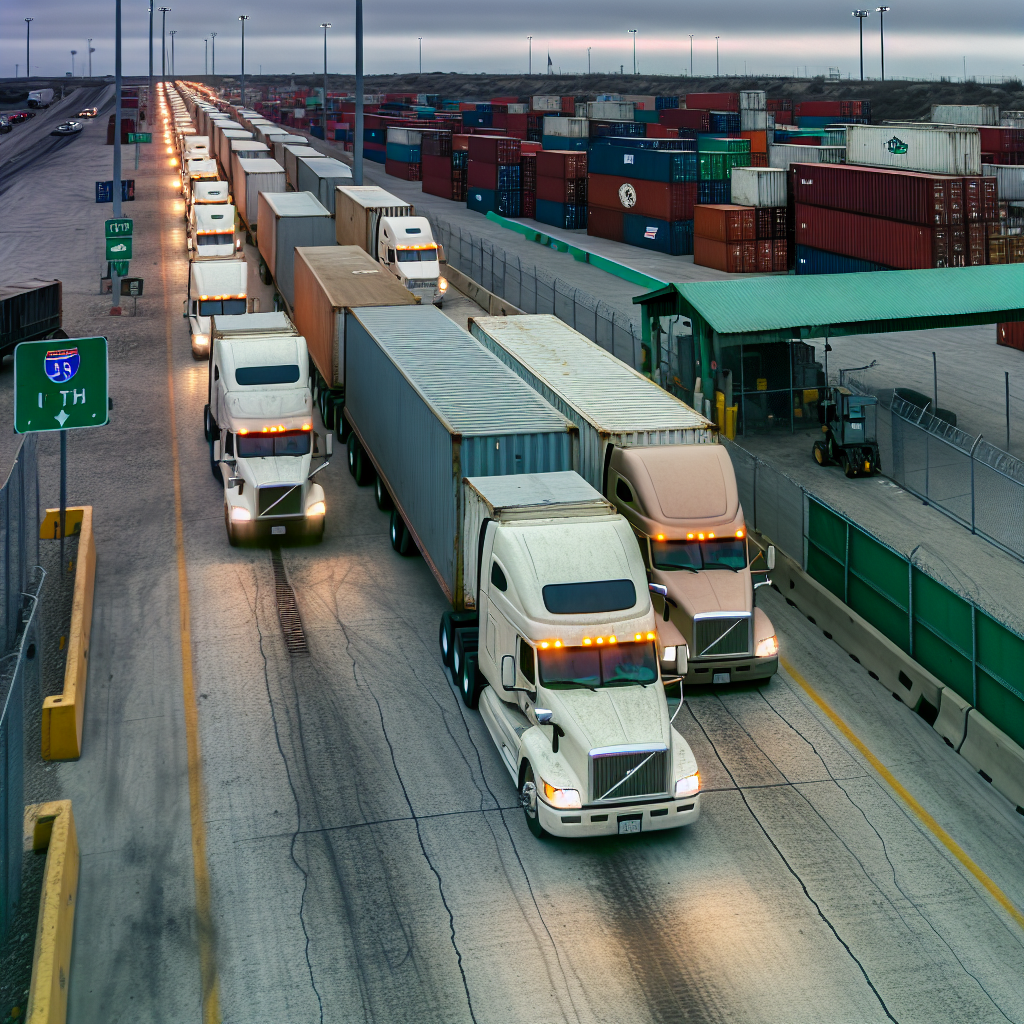
America’s container gateways have largely shed the pandemic’s chaos, with vessel queues a memory and terminals running on schedule. But the recovery isn’t uniform. As trade policy swings and front‑loading unwind the summer cargo rush, import flows are shifting by coast — and that’s changing the playbook for drayage and long‑haul trucking alike.
Fresh figures show the post‑peak comedown arrived in September: inbound loads across the 10 largest U.S. ports fell 6.6% year over year, a reversal from midsummer gains that analysts tied to tariff‑driven pull‑ahead. The outlook points to softer volumes into 2026 if current trade measures hold — a signal that Q4 port‑adjacent freight could be choppier and less plentiful than many truckers planned for in July and August.
Yet the map is splitting. The Southeast is still drawing freight — and doing it efficiently. Georgia Ports reported Savannah handled 486,000 TEUs in September, up 8% from last year, with record rail lifts and operations tuned for velocity: dual‑move truck turns averaging about 50 minutes and intermodal dwell around 22 hours. For carriers, that combo translates into more turns per day for dray fleets, less detention, and cleaner handoffs to long‑haul lanes out of I‑16/I‑95/I‑75.
The Pacific Northwest is on the other side of the curve. The Northwest Seaport Alliance said September box volume fell 13.6% year over year, with weekly voyages trimmed and tough comps versus 2024’s Canada‑diversion bump. For motor carriers in Seattle–Tacoma, that means fewer import pulls and sporadic blank‑sailing gaps — a recipe for lumpy utilization and more pressure to rebalance tractors and chassis toward stronger gateways.
What this means for trucking:
– Drayage demand is normalizing — and local. With summer’s front‑loaded imports fading, Southern California and some East/Gulf hubs will feel softer box turns. Expect tighter appointment windows but fewer multi‑hour queues, improving asset productivity even as total pulls dip.
– Follow the velocity. Savannah’s operating metrics point to faster terminal cycles and quicker rail egress, which supports higher dray turns and more predictable same‑day drop‑and‑hooks. Carriers positioned in the Southeast are best placed to capitalize on that reliability through year‑end.
– Be ready to shift capacity. The PNW slowdown underscores how tariff timing and service changes ripple ashore. Brokers and carriers should keep power and chassis flexible, shifting toward ports still posting year‑over‑year growth and away from nodes with rising blank sailings and thinner weekly strings.
Bottom line: The pandemic backlog is in the rearview, but policy‑driven demand is redrawing port winners and losers month to month. Trucking strategies that ride the fastest gates, the lowest dwell, and the most reliable vessel strings — rather than the same old ZIP codes — will book the steadier revenue through holiday season and into early 2026.
Sources: FreightWaves, gCaptain, Georgia Ports Authority, Westside Seattle
This article was prepared exclusively for TruckStopInsider.com. Republishing is permitted only with proper credit and a link back to the original source.