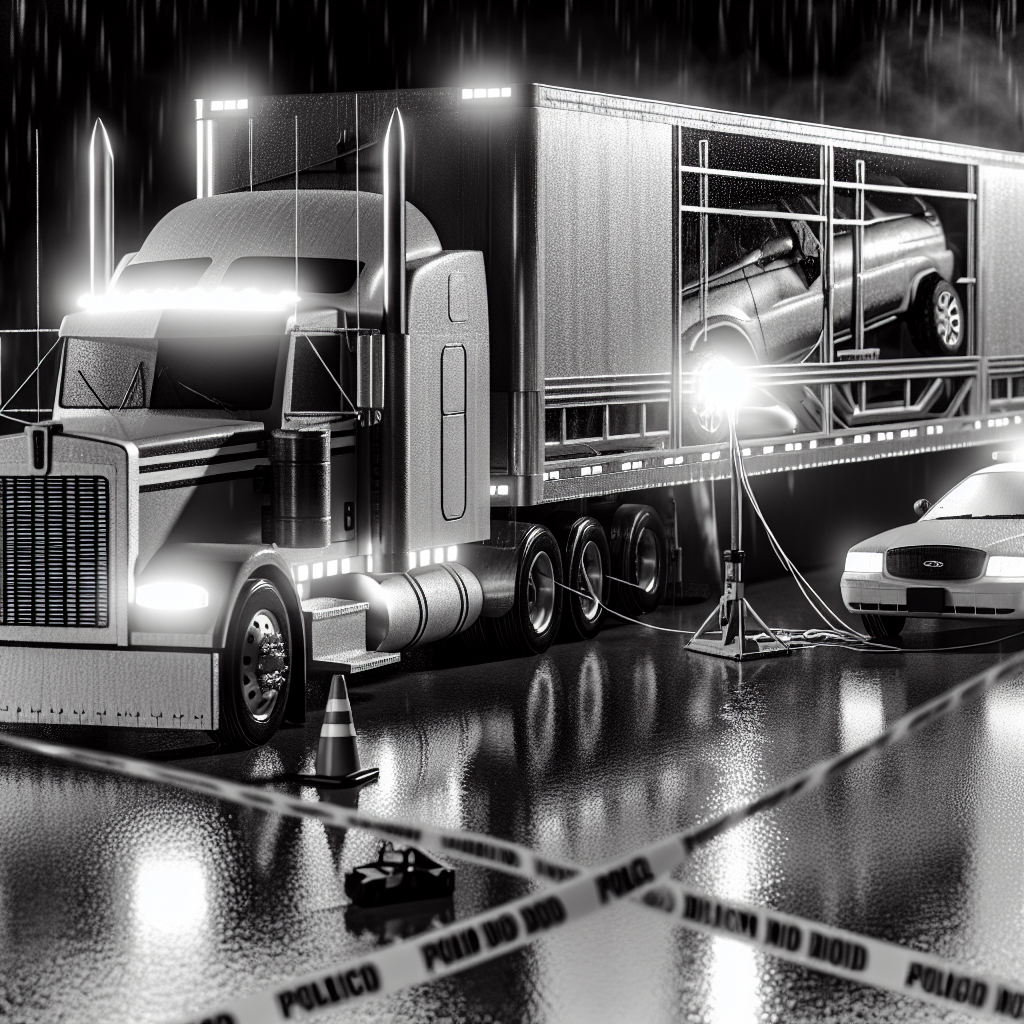
Shaquille O’Neal’s newly customized 2025 Range Rover vanished somewhere between Dahlonega, Georgia, and Baton Rouge, Louisiana — a disappearance authorities believe was engineered through a fraudulent pickup tied to a cyber compromise of a transport provider. For vehicle shippers and auto‑haul carriers, the incident is a high‑profile reminder that identity‑based cargo theft has moved from freight docks to showroom‑grade cars in enclosed trailers.
Georgia investigators told local media that the SUV never reached its destination after a third‑party arranged the move. One carrier named in the paperwork, FirstLine Trucking LLC, reported it did not dispatch the driver who claimed the job, an indicator of dispatch spoofing and carrier impersonation. Detectives also said GPS data suggested the vehicle may already be inside a shipping container bound overseas — a common endgame when thieves quickly move high‑value assets beyond U.S. jurisdiction.
A separate update identified a tow truck registered to Griffin Wrecker Service LLC, bearing Georgia tag YIW241, as part of the handoff to an Atlanta address, with investigators emphasizing that an unauthorized party likely took possession under false pretenses. The dealer that sold and customized the vehicle, Effortless Motors, has offered a $10,000 reward and says it is cooperating with local and federal authorities. No arrests had been announced as of Oct. 27.
Coverage over the weekend reinforced the cyber angle: a Sunday brief noted the working assumption that the transport company’s systems were compromised, and reiterated that the SUV — valued around $180,000 before extensive mods — could have approached $300,000 after the work. O’Neal is assisting law enforcement.
Why it matters for trucking: the mechanics mirror the “strategic theft” playbook now roiling freight — criminals harvest dispatch details, impersonate legitimate carriers or drivers, and create believable load documents to execute clean pickups. In this case, the reported “we never dispatched that driver” flag is straight from that script. For auto haulers, the lesson is that a single‑unit pickup can be just as vulnerable as a full truckload if controls around release, identity, and change orders are weak.
Risk controls operators can deploy now include: verifying driver identity with government ID plus a real‑time photo match to MVR/insurance records before release; validating carrier authority and insurance from a known‑good FMCSA lookup, not links in an email; issuing pickup codes and eBOLs that require multi‑factor confirmation at both origin and destination; and treating any change to destination, consignee, or driver phone numbers as a stop‑work event that must be reauthorized via a known contact on file. If theft is suspected, escalate immediately to the originating port and ocean carriers to request holds on likely export lanes while filing with local police and NICB — time to containerization can be measured in hours, not days.
Brand and VIP moves also demand tighter OPSEC: avoid posting vehicle images, VINs, or routing windows on public channels; stage pickups at controlled facilities; and require enclosed equipment with tamper‑evident door seals and redundant trackers (vehicle plus trailer/tractor) reporting to independent platforms. Brokers should harden their own portals with phishing‑resistant MFA and monitor for look‑alike domains that can trick shippers into issuing forged work orders.
The bottom line: O’Neal’s missing Range Rover is not just celebrity clickbait — it’s a case study in how quickly identity‑driven theft tactics are migrating across cargo types. Auto‑haul carriers and brokers that formalize “trust‑but‑verify” release procedures and zero‑tolerance change‑management will be far better positioned to keep high‑value iron from quietly rolling into a container and off the grid.
Sources: FreightWaves, WSB-TV Atlanta, Benzinga, Indulgexpress
This article was prepared exclusively for TruckStopInsider.com. Republishing is permitted only with proper credit and a link back to the original source.