
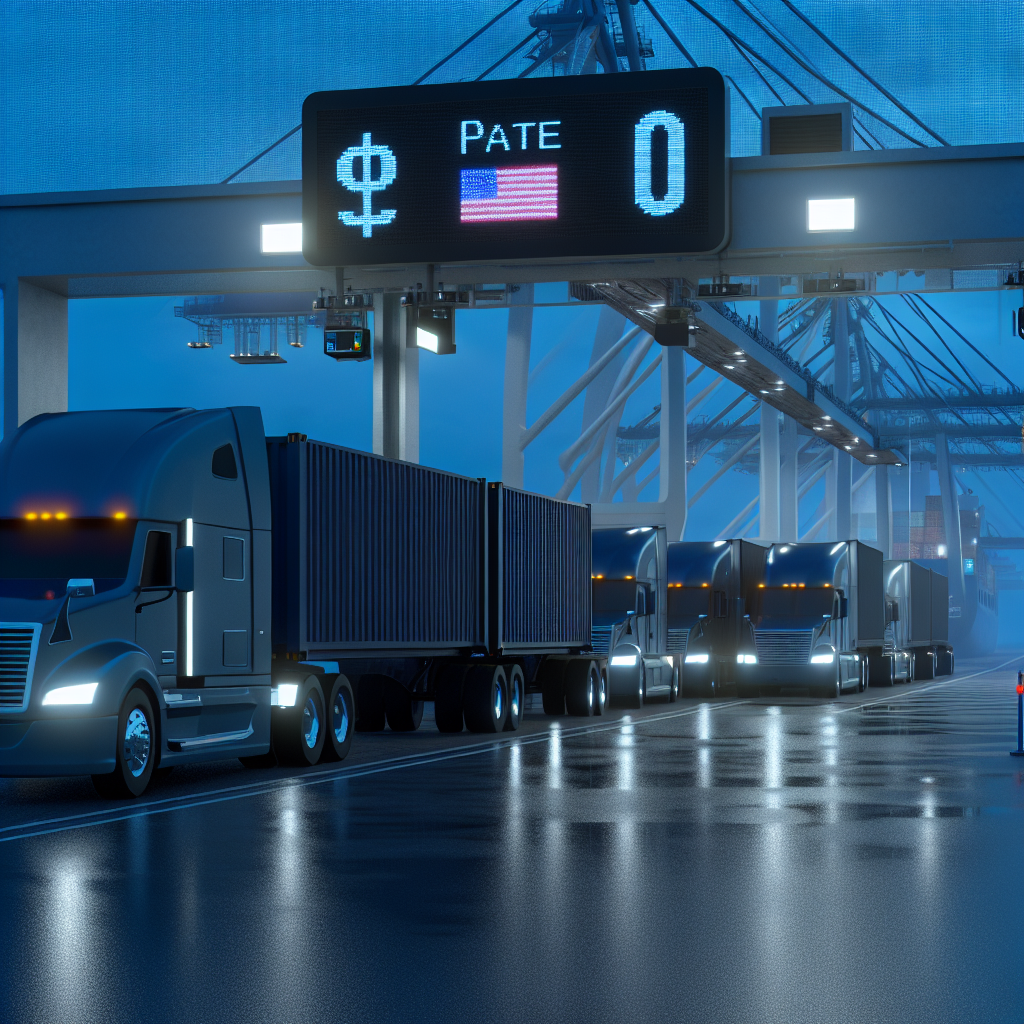
The United States has suspended for one year the new Section 301 port fees on China-linked ships, a move that took effect at 12:01 a.m. Eastern on November 10. The pause lifts near-term cost and routing uncertainty hanging over U.S. import flows since mid-October and removes a potential layer of surcharges that would have filtered through to inland trucking rates and chassis availability.
Beijing responded in kind: China’s Ministry of Transport halted its retaliatory “special port fees” on U.S.-linked vessels beginning 13:01 local time on November 10. Reciprocal suspensions mean carriers no longer have to re-jig rotations just to avoid fee exposure on either side of the Pacific, tamping down the risk of abrupt shifts in port calls that can whipsaw drayage demand and equipment positioning.
Washington’s action freezes the entire ships-related package for a year. Industry groups noted the pause covers fees aimed at Chinese-owned, -operated and -built vessels, the levy on foreign-built vehicle carriers, and planned tariffs on port equipment such as ship-to-shore cranes—items that, if collected, would have flowed into landed costs and, ultimately, trucking bids and fuel the kind of port-mix changes that create chassis and driver-hours inefficiencies.
USTR framed the suspension as part of a negotiated de-escalation with China and opened an unusual one-day public comment window on November 6–7 before finalizing the pause. For transportation providers and importers, that rapid cadence raised immediate implementation questions—chiefly how already-invoiced charges (if any) will be handled and how long the detente will hold. Expect additional guidance as agencies translate the high-level decision into day-to-day port and customs instructions.
Signal to truckers: near-term stability. Without the fee overhang, ocean carriers have less incentive to consolidate U.S. calls into only the largest gateways to minimize entries. That reduces the odds of sudden volume pullbacks at secondary ports that can strand chassis pools, empty boxes and railcars in the wrong places—and reduces the likelihood of last-minute drayage reassignments and detention/demurrage snarls. It also eases pressure around ro-ro auto flows that feed time-sensitive parts moves by truck.
But it’s a truce, not a treaty. The suspension runs through November 2026 unless extended, and both capitals kept leverage: USTR said the U.S. will pursue negotiations under Section 301 while continuing domestic efforts to rebuild shipbuilding capacity. Carriers and shippers are likely to keep contingency routings on the shelf, which means trucking markets should still plan for periodic volume bunching around blank sailings and service restructures—just with lower probability than a week ago.
Early signals from stakeholders back the pause. Port authorities publicly applauded the de-escalation and pressed for alternative policies that strengthen U.S. maritime competitiveness without injecting new costs into supply chains—an approach that, if adopted, would keep drayage volumes steadier and reduce whiplash at terminal gates.
Practical takeaways for fleets and shippers:
– Revisit any “government surcharge” language in contracts; if carriers added fee-linked adders in October, clarify whether they will be reversed or credited.
– Watch for port-by-port notices from marine terminals and CBP clarifying how payments and documentation are handled during the suspension.
– Use the breathing room to lock in Q1–Q2 2026 drayage capacity where port selection is stable; keep contingency plans alive in case talks stall.
Context: In announcing the U.S. suspension, trade officials emphasized the move stems from the late-October U.S.–China agreement and explicitly stated the one-year duration. China’s transport ministry mirrored the timing and scope on its side. Some carriers and U.S. operators had already reported exposure to China’s fees before the truce; the reciprocal halt removes those immediate cash calls.
Sources: FreightWaves, Reuters, United States Trade Representative, Maritime Professional
This article was prepared exclusively for TruckStopInsider.com. Republishing is permitted only with proper credit and a link back to the original source.