
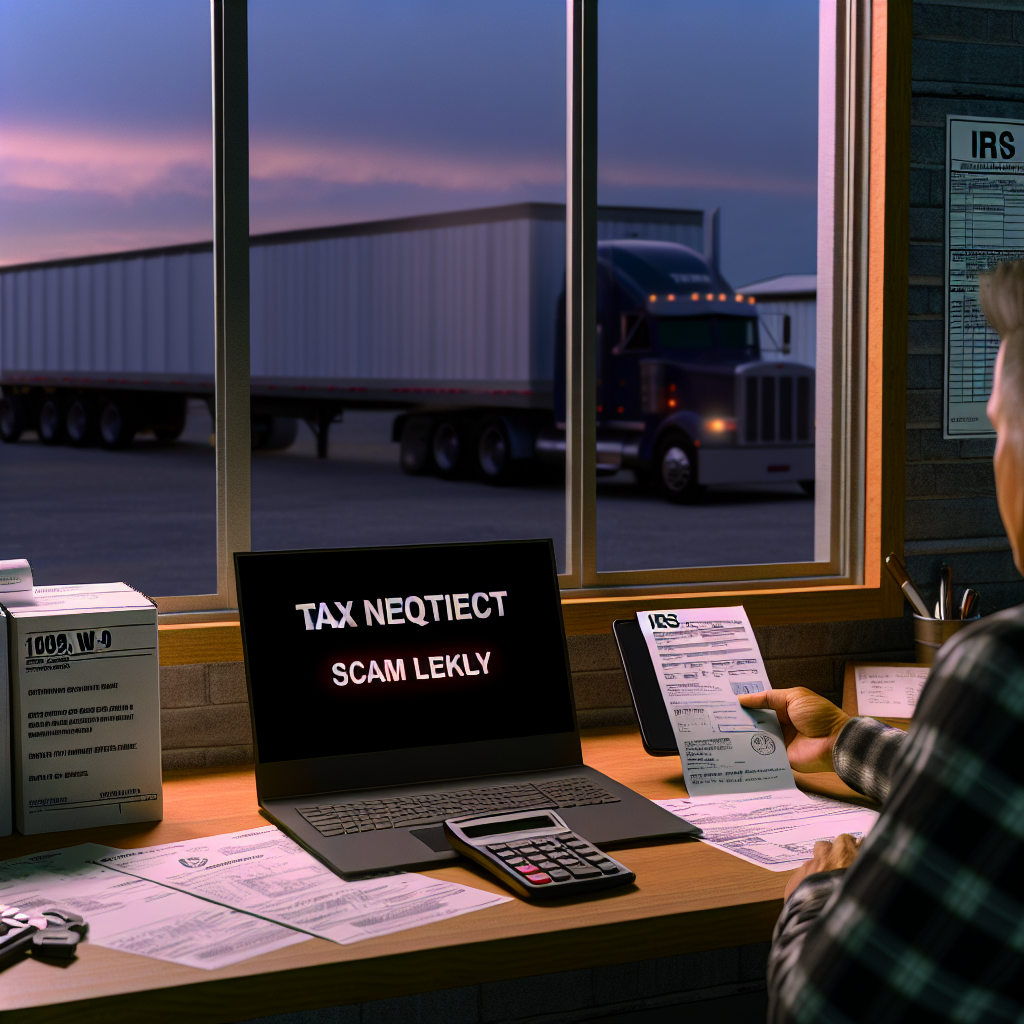
Why truckers are prime targets right now
With filing season in full swing, criminals are dialing, texting and emailing owner-operators and fleet offices posing as the IRS. The agency’s 2026 Dirty Dozen list flags IRS impersonation via email, text and robocalls—often with QR codes or links to spoofed sites—as a top threat. March 5, 2026 was also National “Slam the Scam” Day, underscoring that impersonation schemes are surging right as carriers are juggling payroll, 1099s and quarterly filings. Stay skeptical of any unexpected outreach that pressures you to act fast.
Red flags: what the real IRS will—and won’t—do
- The IRS almost always contacts you first by U.S. mail. It does not demand immediate payment by gift cards, wire, or crypto; it doesn’t threaten arrest; and it won’t direct you to non-IRS websites. Texts or emails come only with your prior permission, and legitimate automated calls won’t share account specifics or threaten you.
- Caller ID can be spoofed. If you get a threatening call or one pushing unusual payment methods, hang up. You can verify whether a notice is real at IRS.gov or by calling the IRS at 800-829-1040.
- If someone shows up at your yard: Unannounced visits are rare. Revenue agents (audits) and revenue officers (collections) generally mail first; criminal investigation agents may visit unannounced but will present law enforcement credentials. IRS fuel inspectors can visit unannounced at sites where taxable fuel is produced or stored—relevant if your operation keeps bulk diesel tanks— and they carry official IDs and typically arrive in government vehicles. Always ask to see credentials and verify.
Scams hitting fleets and O/Os in 2026
- Phishing and “smishing” messages that look official and push you to “verify” accounts or claim a refund. Some include QR codes or attachments labeled “Tax Transcript”—don’t click or open. The IRS has logged hundreds of social-media impersonation incidents and warns that malware can ride along with these messages.
- Robocalls and AI voice-mimic scams that sound authoritative, sometimes citing a “case number” or threatening license action. The IRS says it won’t leave urgent prerecorded messages or demand immediate payment. Hang up and independently verify.
- “Resolution department” pitches targeting small businesses. Recent consumer alerts flag calls using names like “Tax Review Unit” or “Tax Resolution Oversight Department” to sell high-fee “fixes” for supposed debts. Don’t engage; real collections start with letters you can look up and confirm.
High-impact steps for owner-operators and fleet managers
- Set a single verification protocol. Instruct dispatch, safety and payroll not to share EINs, payroll data, driver SSNs or bank info over the phone. Direct all tax-related contacts to one trained point person who verifies letter numbers and caller identities against official IRS resources before responding.
- Know the employment-tax script. If you fall behind on deposits, the IRS uses formal notices and may schedule calls via Letter 5857 (FTD Alert). A surprise demand for payment over the phone—especially via gift cards or wire—is a red flag.
- Protect your yard and back office. If an individual claims to be from the IRS, ask to see both the pocket commission and the HSPD-12 ID card and call the number on your prior IRS letter to confirm. For CI agents, you can use the Employee Verification Tool when appropriate.
- Use official payment channels only. If you truly owe, you control the payment using established IRS options—never gift cards, crypto ATMs or third-party apps pushed by a caller.
How to report an IRS imposter—and help the next carrier
- Phone scams: Record the number, hang up, and report it to the Treasury Inspector General for Tax Administration (TIGTA) via its IRS Impersonation Scam form or by calling 800-366-4484. Then forward the number to the IRS at phishing@irs.gov with “IRS Phone Scam” in the subject line.
- Suspicious emails, texts or social posts: Don’t click. Forward IRS-themed phishing to phishing@irs.gov and follow the IRS instructions for reporting fake messages and accounts.
- Any impersonation attempt: File a quick report at ReportFraud.FTC.gov so enforcement can spot patterns hitting small businesses, including carriers.
- If you received a letter: Use IRS resources to confirm the notice or letter number before you respond.
Bottom line: During a busy spring freight cycle, build five minutes of verification into every “IRS” contact. A quick hang-up-and-verify approach can prevent identity theft, payroll disruption and six-figure losses—and keep your trucks, drivers and cashflow moving.
Sources Consulted: RCB Bank Learning Center; Internal Revenue Service; Federal Trade Commission.
Need to file your Form 2290?
Join thousands of owner-operators and carriers who trust HeavyTax.com for fast and easy HVUT e-filing.
This article was prepared exclusively for truckstopinsider.com. For professional tax advice, consult a qualified professional.